Data Labeling
The Data Labeling Tool enables users to categorize the imported raw data by applying corresponding tags, such as arc or no-arc, snoring or no-snoring, to different sections of the current graph through a visual interface. This tool then segments the raw data based on labeling and creates datasets optimized for training machine learning models. We also provide a pre-labeling tool to assist with labeling (optional)
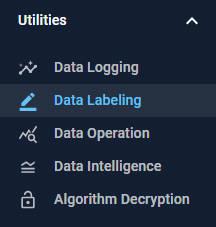
Click the Data Labeling button under the Utilities set to open Data Labeling tool.
Data Import
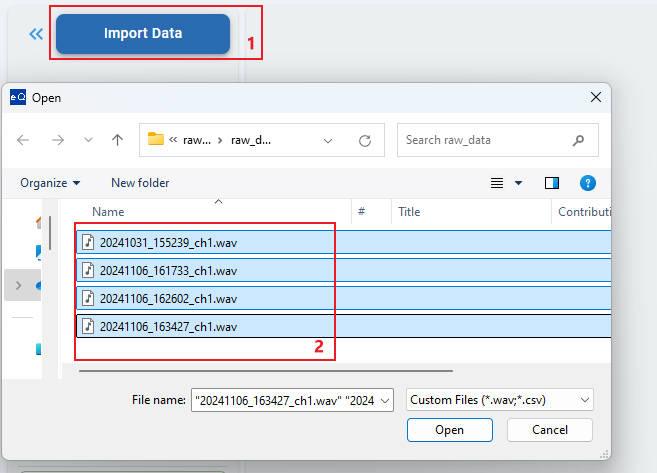
Raw data: Continuous current data is stored in time sequence. It is single-channel data, in CSV format (values separated by spaces) or float32 WAV format (single channel).
Rename labels
The label list contains labels for classification. The number of labels in the list corresponds to the number of classes. When you first access this tool, the label list is empty. Click the + button, create a class, and add it to the label list.
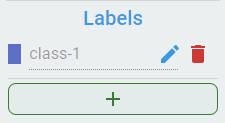
You can edit the alias of labels. This operation is optional and only intends to enhance label readability.
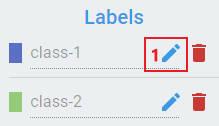
To edit the alias, first click the edit button:
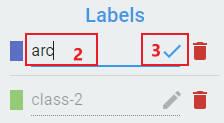
Second, input the alias string, then click the check button to apply the rename.
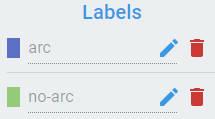
To rename all labels one by one, repeat the steps above.
Labeling Operations
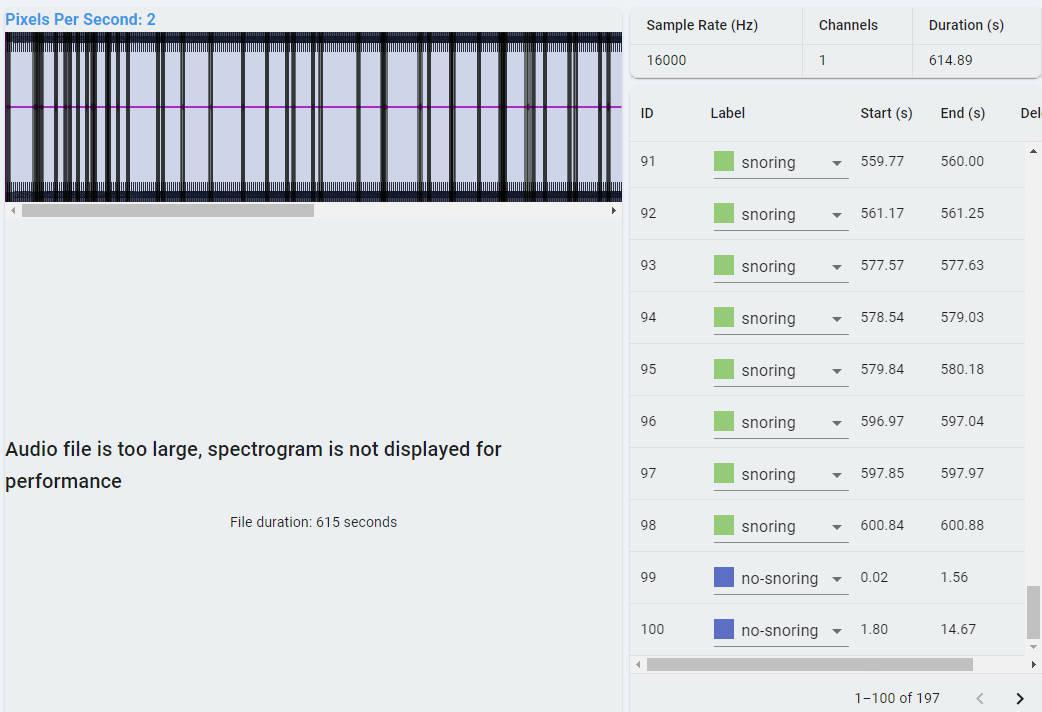
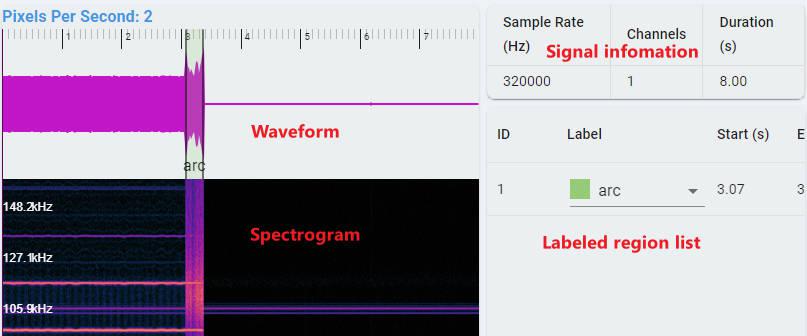 Waveform: Time series waveform of data.
Spectrogram: Time-frequency domain waveform of data, using STFT transform. The horizontal axis (abscissa) represents time, while the vertical axis (ordinate) represents frequency.
Labeled region list: Each region drawn on the time series waveform corresponds to a record here, including the classification label, start time, and end time.
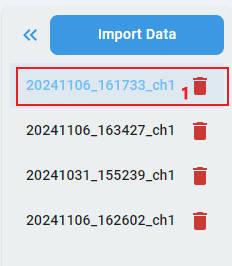
Step 1: Select a file to label.
Step 2: Draw a range on a waveform graph.
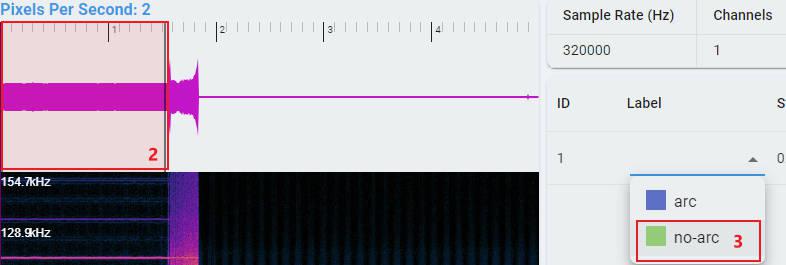
Step 3: Choose the label for the labeled region.
Repeat steps from 2 to 3 and label all the regions.
Repeat steps from 1 to 3 to label all data files.
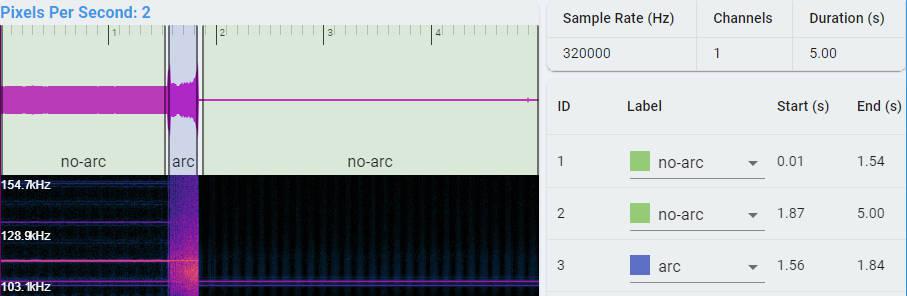
Edit Labeled Result
Edit region: You can modify the range of a region by dragging its boundaries.
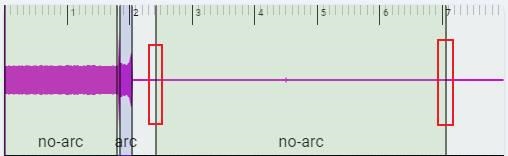
You can modify the label of a region by reselecting the label.
Note: All ranges must be labeled before running the data generation.
Generate Dataset
Click the Generate Dataset button. After processing, the data folders, segmented according to the labeling results, appear in a pop-up window.
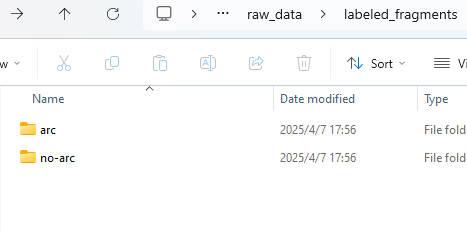
Note: You can import the segmented data into Data Intelligence to analyze and obtain the recommended parameters such as window size, sample frequency. Next, use Data Operation to process the segmented continuous data according to the recommended parameters to create dataset that suitable for training.
Pre-labeling (Optional)
We provide a pre-labeling tool that can automatically perform pre-labeling on continuous data. You can make adjustments based on the pre-labeling results to reduce the labeling workload.

To use pre-labeling:
Import your continuous data files. Here we load an audio file containing snoring sounds to demonstate the snoring detection pre-labeling process.
Click the
Pre-labeling Toolbutton. In the pop-up window, select a pre-labeling algorithm (currently only supports the snoring detection algorithm), then click theConfirmbutton to confirm your selection.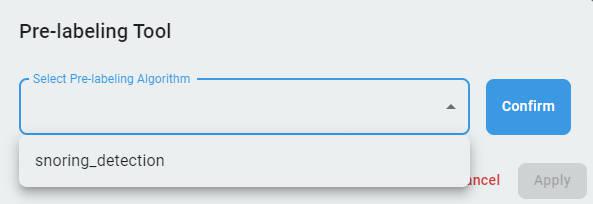
A warning dialog will pop up, stating that this operation will delete all previous results. If you want to proceed, click the
Confirmbutton to enter the pre-labeling process panel.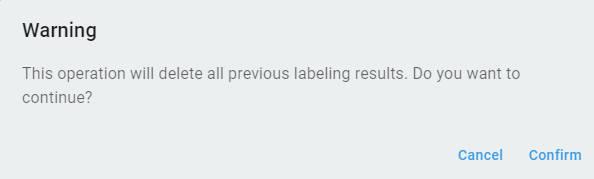
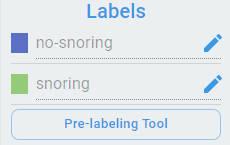
The label list will be automatically changed to the algorithm’s preset.
Configure the parameters of the pre-labeling algorithm (the number and type of parameters depend on the pre-labeling algorithm selected, different algorithms have different parameters) or use the default values. Select the file list that need pre-labeling (must be files that have already been imported), and then click the
Applybutton, and clickConfirmon the warning dialog that appears. Wait for a moment to complete the pre-labeling process.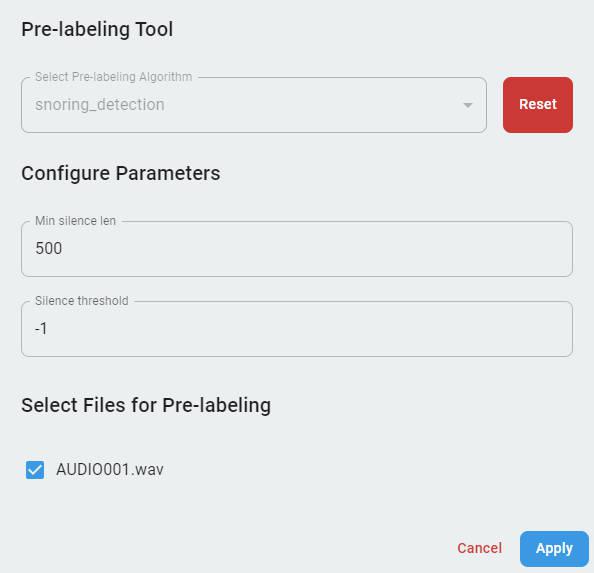
The pre-labeling results appears in the labeled region list. Review all results and manually adjust the window or label categories, delete or add regions as needed. The subsequent process is the same as the standard manual labeling workflow.